
Paramus, NJ buying guide / Phased buying, new vs. used
Used and new office furniture for a phased Paramus office setup
Furnishing a Paramus office in stages starts with deciding which desks and chairs people need now and which purchases can wait. Compare used and new office furniture by condition, fit, and available quantity, then plan meeting tables, storage, and reception around the pieces you keep. This guide helps you build a phased list without assuming today's inventory will still be available later.
The short answer
Buy in the order your people feel it: chairs and work surfaces first, then meeting furniture, then storage and reception. Consider used for steel storage, desk frames, and tables you can inspect in person; consider new where you need many identical pieces or specific adjustments. Write down finishes and dimensions from phase one so later phases can match.
Why a phased purchase often works better
A single large order looks efficient on paper, but it forces every decision to happen at the same moment, often before you know how the team will actually use the room. A phased purchase lets you furnish what is needed to open or reorganize, live with it for a few weeks, and then buy the rest with real information.
Phasing also spreads cost. If your budget is fixed for this quarter, it is usually better to buy fewer, well-fitted chairs and desks now than to stretch the same money across every room and end up replacing compromises later.
A sensible order for most offices
Every office is different, but this sequence protects the things people use for hours each day and leaves easier-to-change items for later.
- Phase 1: seating and work surfaces. Task chairs and desks or workstations for the people who will be in the room every day. These affect comfort and productivity immediately.
- Phase 2: meeting space. A conference or meeting table sized to the room and the number of people who actually meet, plus matching chairs.
- Phase 3: storage. Filing, lateral files, and lockers once you know what paper and equipment really need a home.
- Phase 4: reception and finishing pieces. Guest seating, a reception desk, and accent pieces, chosen to match finishes you have already committed to.
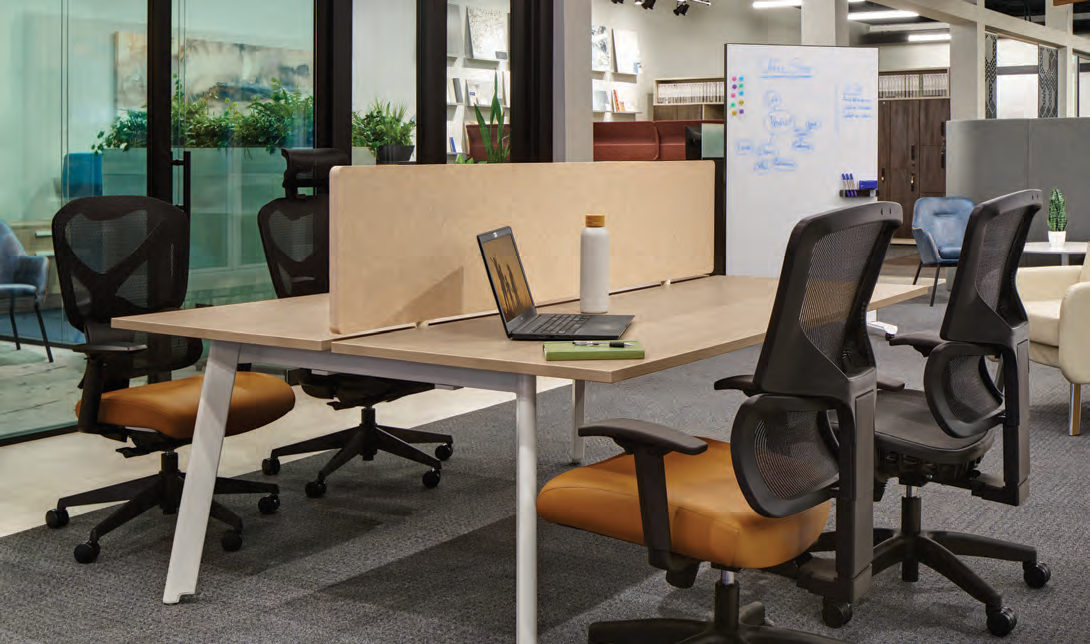 Catalog example
Deciding used or new, one item at a time
The new-versus-used choice is easier when you stop treating it as one decision for the whole office. Ask the question separately for each category.
Check each used piece in person where possible: drawers, glides, edges, joints, and stability all matter. Chairs need more than a visual check; sit in them and test the controls. If you need twelve identical chairs with the same mechanism, ask whether that quantity is available in matching condition before planning around it.
New furniture makes the most sense where you need a specific configuration, a finish that must match future purchases, or a quantity that used stock may not provide in one batch. Ask about terms for each piece individually; do not assume used and new items carry the same warranty or return terms.
- Desks and workstations: Record surface depth, return orientation, and any storage attached to the desk. A replacement that is wider or deeper than the first phase can change the entire row and its aisle space.
- Office chairs: Test every adjustment on the actual chairs being considered. Count how many suitable chairs are available now, and distinguish necessary fit features from a preference for matching upholstery.
- Files and cabinets: Open drawers, check slides and handles, and ask whether keys and any required hardware are included. Inspect condition instead of treating all steel storage as equivalent.
For a fuller condition and cost checklist, read our guide to comparing new and used office furniture before deciding which pieces belong in the first phase.
Keeping later phases consistent with the first
The biggest risk of phasing is a mismatched office. Avoid it by recording, during phase one, the exact finish names, laminate or veneer colors, frame colors, desk heights, and worksurface depths of what you bought. Photograph labels where they exist.
When you return for the next phase, bring those notes. If a matching item is no longer available, choose something deliberately complementary, such as a contrasting base color repeated across every table, instead of a near-miss match that looks like an error.
Budget notes that prevent surprises
When comparing quotes across phases, list each line separately: furniture, delivery, assembly or installation, and removal of old furniture if you need it. Ask PI Office Furniture which of these apply to your order and what they cost; do not assume any of them are included. Prices and availability change, especially for used pieces, so confirm both before committing to a schedule.
Before adding a larger desk or table in a later phase, use the Hackensack guide to measuring furniture access to record doors, turns, and the largest delivered component.
Illustrative planning scenario
Planning scenario: a 10-person office opening in stages
Imagine a professional office opening with six people and planning for ten. Its measured floor plan has six initial desk positions, four positions reserved for possible growth, and a separate small meeting room.
- Phase 1: six task chairs tested in person and six desks with the same worksurface depth, plus two extra chairs for visitors.
- Record the desk finish, height, and frame color. Leave the reserved desk area open rather than filling it with a mismatched piece.
- Phase 2, a few weeks later: size the meeting table using how many people actually met in the first month, not a guess.
- Phase 3: add storage only after seeing what paper and equipment piled up. Consider used steel files if condition checks out.
- Phase 4: review whether the four reserved desk positions are needed. Compare available additions against the phase-one notes rather than assuming the same desks will still be stocked, and finish reception as the budget allows.
This is an illustrative plan to show the sequencing, not a description of a real customer project.
What to bring when you compare phases
A one-page record keeps each phase consistent and makes conversations with the showroom faster.
- Headcount now and in 12 months
- Separates what to buy today from space you should reserve.
- Finish and color names from phase one
- Lets later purchases match or deliberately contrast.
- Desk height and worksurface depth
- Mixed depths make rows look uneven and change aisle widths.
- List of items you plan to keep
- Avoids buying duplicates and shows what new pieces must sit beside.
- Budget per phase
- Helps decide where used saves the most and where new is worth it.
Local resource
Borough of Paramus official website (opens in a new tab)
If your phased fit-out includes construction or electrical work, check the borough's official site for permit and application information. Ask the borough directly about what your project requires; PI Office Furniture does not give permit advice.
Buying furniture for Paramus: questions and answers
What should a Paramus office buy first when furnishing in phases?
Start with task chairs and desks for the people who will use the space every day, then meeting furniture, then storage, then reception. That order protects daily comfort first and leaves easier-to-change pieces for later, when you know how the room is really used.
Can I mix used and new office furniture without the office looking mismatched?
Yes, if you plan it. Keep finishes, frame colors, and desk heights consistent within each zone, and use contrast deliberately rather than accidentally. Bring finish notes and photos of what you already own when you compare options with PI Office Furniture.
Will matching used furniture still be available for my next phase?
Not necessarily. Used availability changes, so if exact matches matter, ask about quantity before buying the first phase, or plan later phases around new pieces chosen to complement the first. Confirm current availability with PI Office Furniture before scheduling.
Does this guide mean PI Office Furniture has a location in Paramus?
This is a Paramus buying guide, not a Paramus branch. Our showroom is at 325 Chestnut Avenue, Hackensack, NJ 07606. PI Office Furniture delivers throughout New Jersey and New York City, including Paramus. Call or text (201) 362-7787 to discuss current furniture and your delivery requirements.
Does the catalog show which used office furniture I can buy now?
No. The linked 2026 manufacturer catalog shows product examples, not PI Office Furniture's current used inventory. A pictured workstation does not establish its price, condition, or availability. Ask about the desks, chairs, and storage needed for your first phase, including quantities and dimensions, and confirm the actual items before planning around them.
How should I compare a used desk with a new desk for phase one?
Compare the working dimensions, return orientation, storage, and condition before comparing appearance. Open drawers, check edges and joints, and verify that the desk sits securely. For a new option, ask about the exact configuration and finish. Compare order-specific terms and the full quoted cost; neither the used label nor the new label tells you which desk fits your plan.
What should I send when asking about a phased Paramus furniture purchase?
Separate the request into furniture needed now and possible later purchases. Include quantities, room measurements, desk depth, finishes you want to keep, and a budget for the first phase. Call or text (201) 362-7787, or use the email link on this page. Include the delivery address so charges, scheduling, and access can be discussed without assuming future stock will match.